Elliott Wave in Trading: The Waves and the Three Rules
Elliott Wave theory says markets move in five waves with the trend (1 to 5) and then three corrective waves against it (A, B, C), reflecting traders' alternating optimism and pessimism. A count is only valid if it keeps three rules: wave 2 never goes beyond the start of wave 1, wave 3 is never the shortest, and wave 4 never overlaps wave 1.
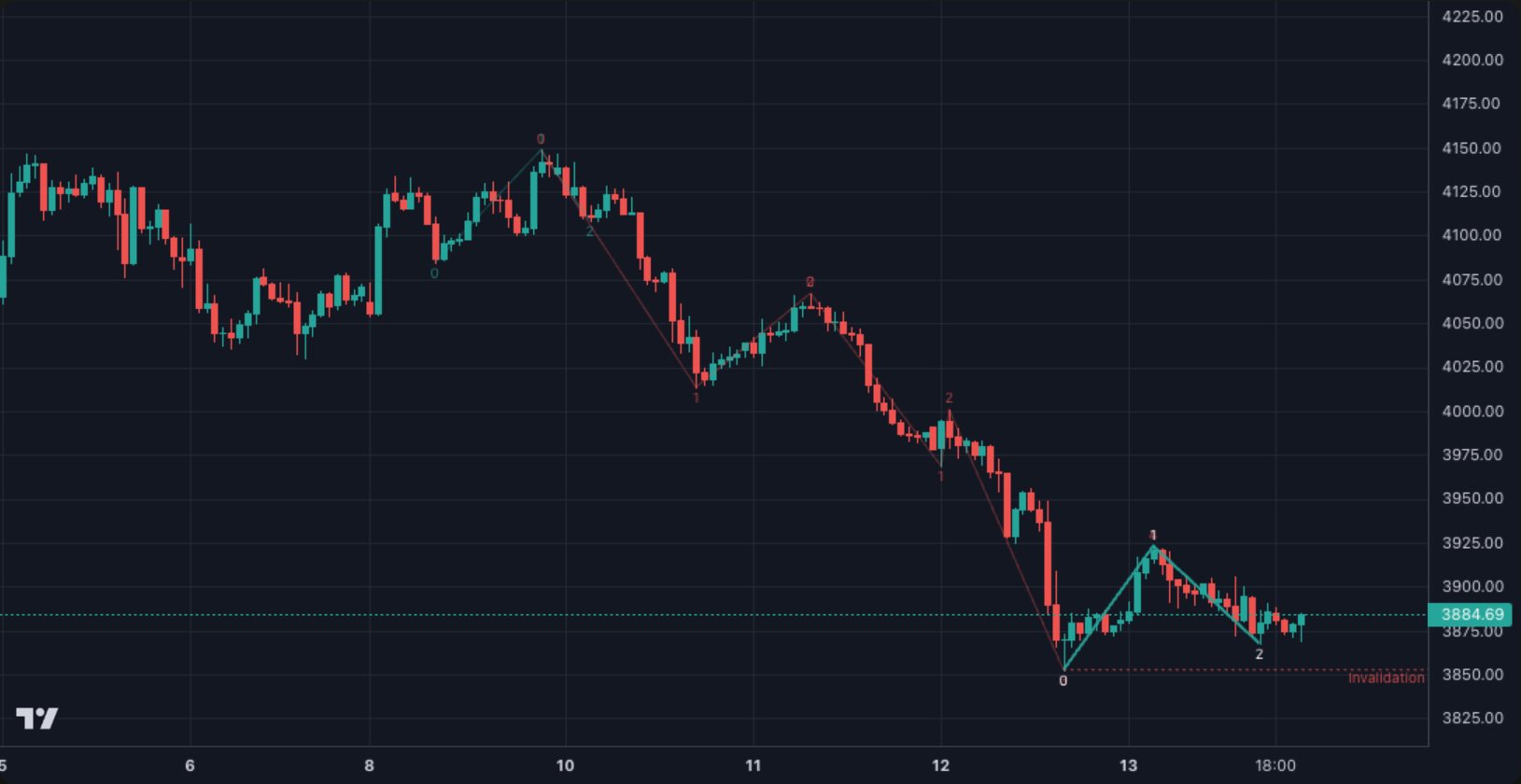
Impulse and corrective waves
- Waves 1, 3 and 5 move with the trend; waves 2 and 4 are corrections inside it.
- Wave 3 is often the strongest and longest.
- After five waves comes an A-B-C correction, after which the trend often resumes.
With Fibonacci
- Wave 2 often retraces 0.382 – 0.786 of wave 1.
- Wave 3 often extends to 1.618 times wave 1.
- Wave 4 often retraces 0.236 – 0.618 of wave 3.
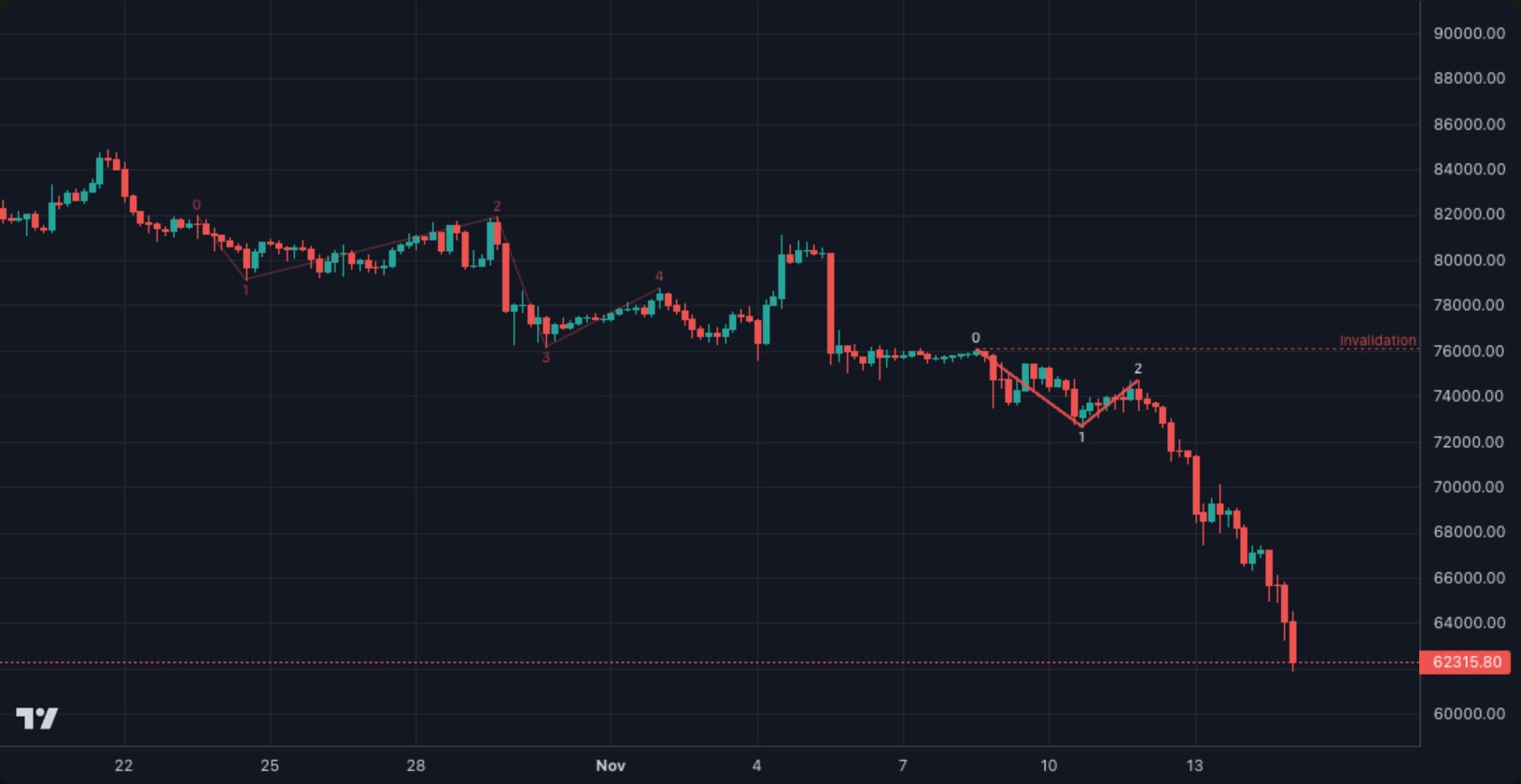
Common mistakes
- Forcing a count onto the chart: if a rule breaks, the count is wrong.
- Trading one count with no plan if it fails.
Frequently asked questions
What are the three Elliott Wave rules?
Wave 2 never goes beyond the start of wave 1, wave 3 is never the shortest of 1, 3 and 5, and wave 4 never enters wave 1's territory.
Which wave is best to trade?
Wave 3, usually the strongest, entered after wave 2's correction ends and wave 1's high breaks.
Does Go2Forex count Elliott Waves automatically?
Yes, the Elliott Wave button on the chart draws the count that passes the three rules, with projected targets.
For education only, not investment advice. Trading leveraged products carries a high risk of losing your capital.